
When Going Back Doesn't Bring You Forward
Glossier, King Kylie, Gap, Hailey and The Running List

When brands are in triage, when they’re experiencing a downward cycle, especially brands that once sat at the top, there are a handful of strategies they tend to reach for to jumpstart the business.
One is nostalgia. What worked before? What can we revive? How do we remind people why they loved us?
The other is licensing. What value can we extract from this brand? Where can we expand? How do we generate revenue without carrying all the operational burden ourselves?
Lately, though, I’ve noticed something interesting. The two strategies are starting to overlap, and it’s made me wonder whether they’re being used in the right way.
Now, what do I know?
I’ve spent more than 25 years working in licensing and brand partnerships. I’ve always been a chronic observer, whether it was watching television while I worked back in the early 2000s or, today, scrolling social media.
Now I have a community of my own. I share opinions, people respond, and over time, I’ve realized that I pay just as much attention to the comments as I do the campaigns themselves. People tell you what excites them. They tell you what’s falling flat.
If you listen long enough, patterns start to emerge. Here are a few I’ve been thinking about.
Glossier
I miss the OG Glossier days. I miss waiting in line with my teenage daughters outside the store. I miss the pink bubble-wrap pouches that doubled as cosmetic bags on every vacation. I miss the stickers, the handwritten names on the bags, the excitement of waiting for your purchase. The feeling that you were part of something before everyone else discovered it.
Glossier wasn’t just selling skincare. It was selling an experience.
Then the pandemic happened, the stores closed, and everything moved online. Dozens of beauty brands borrowed pieces of the Glossier playbook without carrying the cost of flagship stores. Rhode now includes stickers and little extras in its shipments. The direct-to-consumer beauty experience that Glossier helped pioneer suddenly became available to everyone.
This month, Glossier announced a campaign celebrating its New York roots, complete with a licensing collaboration featuring Milton Glaser’s iconic I ❤ NY logo.
It’s cute. But it’s hardly a turnaround strategy.
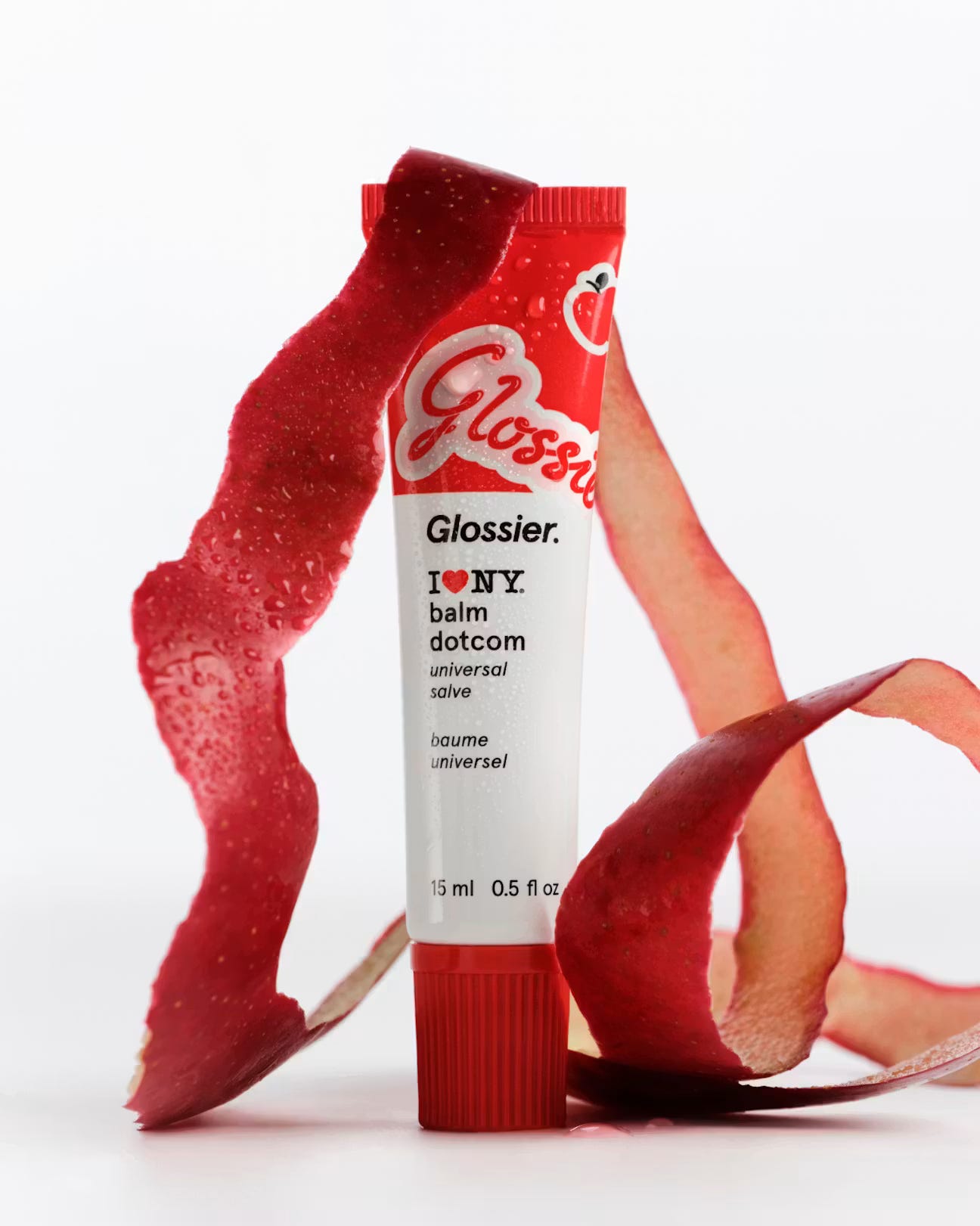
Personally, I find myself wondering why Glossier hasn’t leaned more aggressively into licensing its own brand. Why not partner with retailers that could introduce Glossier to entirely new customers while letting someone else absorb much of the operational burden?
That’s where I see the opportunity.
King Kylie
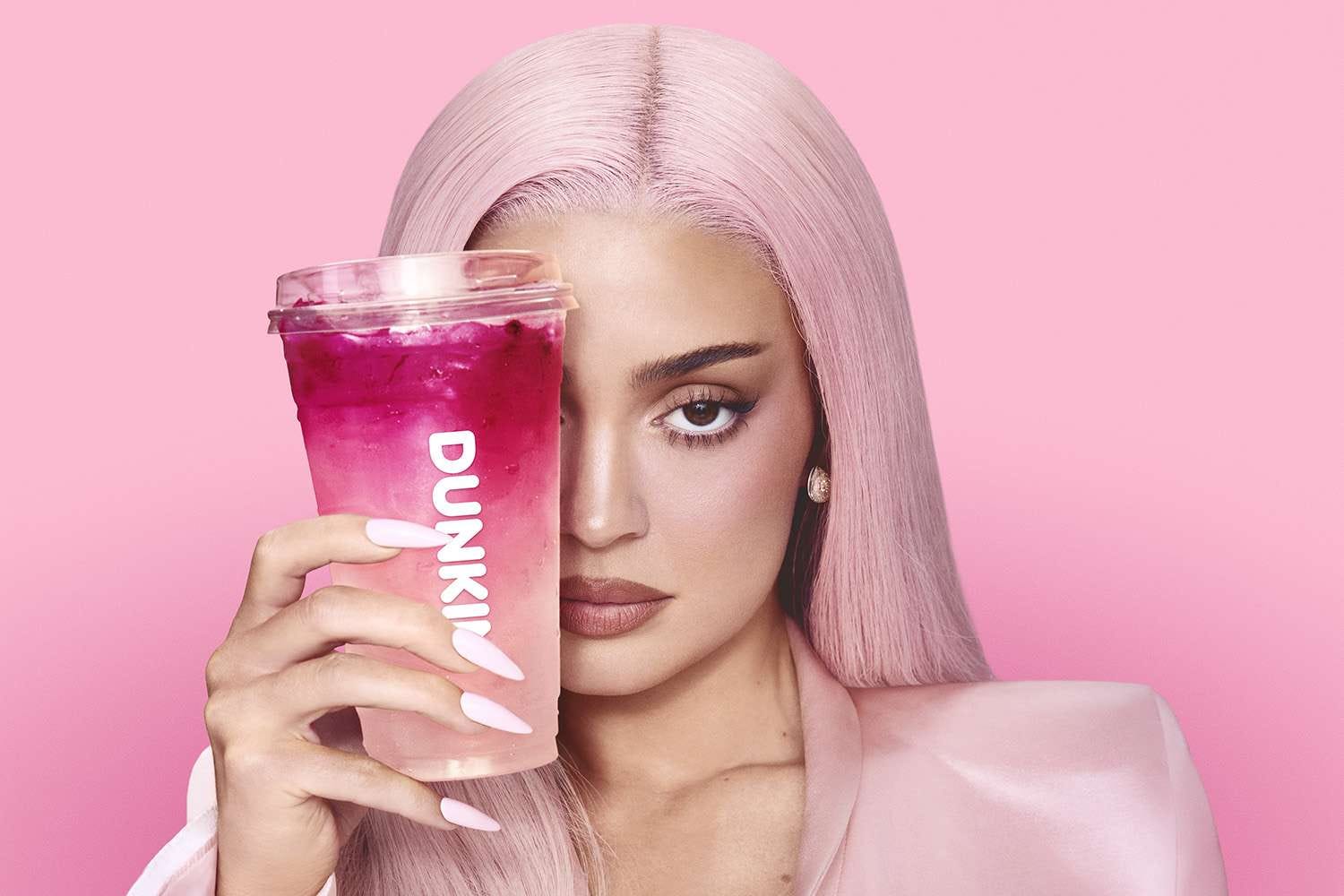
Then there’s Kylie Jenner. Lately, she’s been doing everything she can to remind us of King Kylie. She changed her profile picture. She’s posting throwback content. She launched a bright pink Dunkin’ collaboration built around the King Kylie aesthetic.
King Kylie wasn’t just a hairstyle or a color palette. It was a cultural moment. She ruled Snapchat. She was building community before we even called it community. Like Glossier, she represented the first wave of creator-led beauty brands that completely changed the industry.
Today she’s older. She’s a mom. She shows up when it’s time to promote one of her businesses, then goes back to living her life. That’s okay.
Every time she tries to recreate King Kylie, I’m reminded how much we loved her then, and how much she isn’t that person anymore. Maybe the answer isn’t becoming King Kylie again. Maybe it’s giving today’s Kylie permission to become something entirely different.
Gap
Gap has actually been one of my favorite turnaround stories.
Hiring Zac Posen as Creative Director felt smart. Their collaborations have been thoughtful. The brand has slowly been rebuilding excitement without feeling like it’s trying too hard.
Which is why I was surprised by the relaunch of Gap’s iconic striped sweater. Rather than bringing the sweater back, Zac Posen reimagined it as printed polyester mesh for summer. The response online has been less than enthusiastic.
This struck me as a moment where looking backward more literally may actually have been the better move. The original sweater wasn’t iconic because of the stripes. It was iconic because of how it made people feel. It was cozy, colorful, happy, back-to-school, and giftable.
Printing the image of the sweater onto mesh referenced the look, while it lost the feeling.
Then Hailey Bieber Changed My Mind
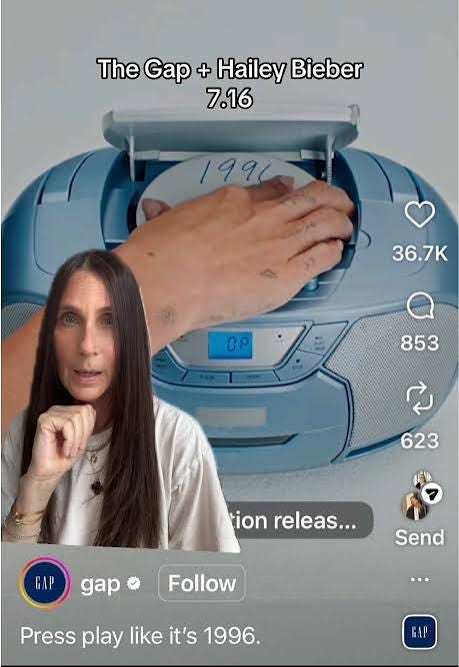
The Gap just announced its collaboration with Hailey Bieber. An image of a boombox with a tattooed hand slipping a CD inside with “1996” (Hailey’s birth year) and “Hailey” written on it. It was the perfect combination of both past and present.
As of today, we now know that Gap is launching the Hailey jean.
The difference is that this campaign didn’t begin with Gap trying to recreate the past. It began with consumers. For months, people have been trying to figure out which Gap jeans Hailey was wearing - were they men’s or a woman’s low-rise baggy? The conversation happened first.
Gap simply paid attention. The campaign references the past without asking us to relive it. It uses nostalgia as context. That’s a very different strategy.
The more I think about it, the less I believe consumers are nostalgic for products or brands. They’re nostalgic for feelings. That’s much harder to recreate. Bringing back an old campaign, an old product, or an old personality isn’t automatically the answer. Especially for younger brands like Glossier and Kylie Cosmetics, whose heyday isn’t decades behind us - it was yesterday. That’s not nostalgia, that’s recent memory.
Another thing I’ve realized while writing this piece is that I mentally file away every collaboration, licensing deal, and partnership I come across. Individually, they’re interesting. Collectively, they start to reveal patterns. Those patterns have become one of the most valuable tools in my work with clients. They help me understand where brands are headed, how retailers are thinking, what consumers respond to, and where opportunities are beginning to emerge.
For years, I’ve kept tabs on brands in my head, and I recently decided to start memorializing them as a running list of the collaborations, licenses, and marketing moves that make me take note. It’s not just a list; it’s my perspectives and insights, and the links I find worth saving.
If you’re a paid subscriber, you’ll have access to the Brand Plus Brand: The Running List that I will update IRL as I spot new collabs. Or you can buy it HERE for a flat fee.
Over time, you might begin to see some of the patterns I see, and hopefully share with me some new ones that you see.
Soooo smart. Wonderful writer